发布时间:2025-10-28
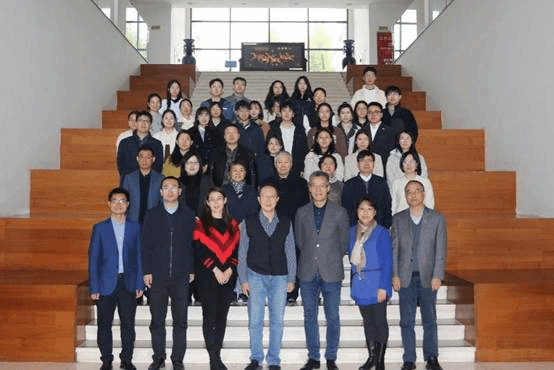
On October 25, 2025, the opening ceremony of the 2025 Business Administration Doctoral Forum was successfully held at Tianjin University Conference Building. Under the theme "Advancing with a 130-Year Legacy, Igniting the Future with Digital Intelligence and Innovation," the forum brought together over 60 participant, including experts and scholars in business administration from Peking University, Renmin University of China, Linköping University (Sweden), National University of Singapore, Tianjin University, Nankai University, and Tianjin University of Finance. Also present were editors from renowned journals such as International Journal of Production Economics, Nankai Business Review, Chinese Management Studies, and Journal of Tianjin University (Social Sciences), along with doctoral students from various universities. Yang Baochen and Zheng Chundong, Vice Deans of Tianjin University's College of Management and Economics (hereafter called CoME), attended the event.
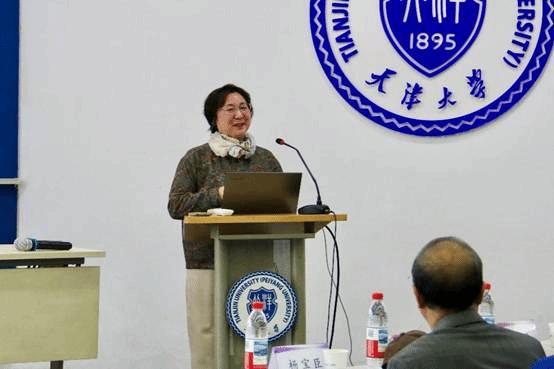
The forum opening ceremony was hosted by Professor Zhang Huiying from CoME, who outlined the forum's overview and expressed gratitude to Tianjin University Graduate School for their strong support.
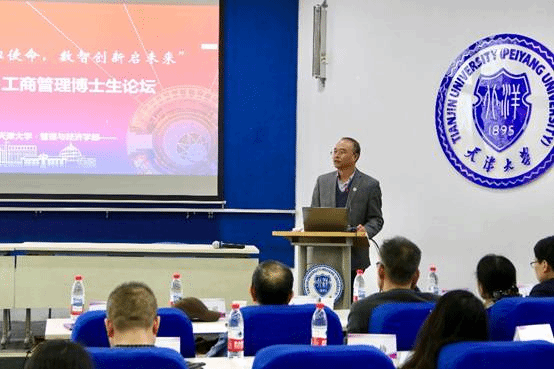
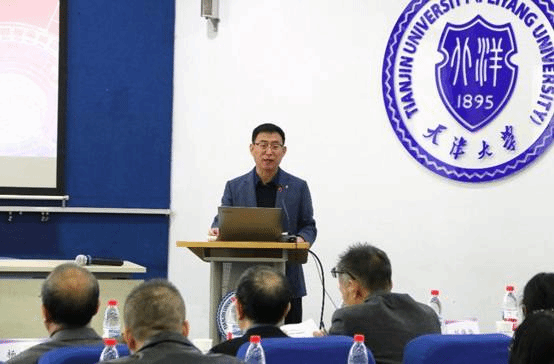
Subsequently, Professor Yang Baochen delivered a speech. On behalf of the College, he extended a warm welcome to all guests and doctoral students. He pointed out that the forum aims to provide a high-level exchange platform for young scholars, encouraging everyone to fully utilize this opportunity to actively present research achievements and engage in in-depth academic discussions. Yang Baochen expressed his hope that the insights and cutting-edge results from this forum would inject new vitality into the development of Tianjin University's business administration discipline and wished the doctoral forum complete success.
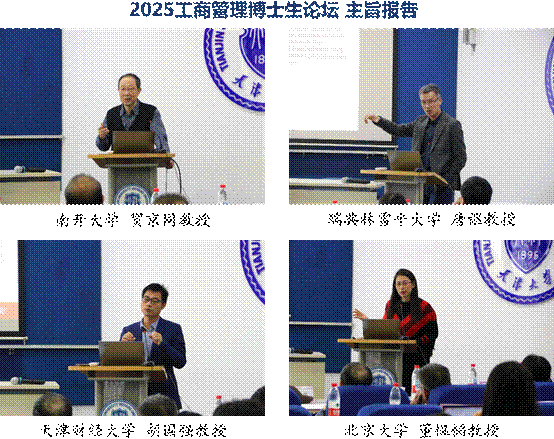
The expert sharing session was chaired by Professor Pan Jingzhou, Director of the Organization and Strategic Management Department at CoME. Professor He Jingtong from Nankai University, Professor Tang Ou from Linköping University (Sweden), Professor Hu Guoqiang, Dean of the School of Accounting at Tianjin University of Finance, and Professor Dong Yuntao from Peking University delivered keynote reports respectively.
Professor He Jingtong elaborated on the important position of behavioral economics as a frontier of theoretical economics. He stated that behavioral economics does not simply graft psychology onto economics but inherits and develops mainstream economics by revising the traditional "rational man" assumption and introducing more realistic concepts such as "bounded rationality." Its core lies in enhancing economics' explanatory and predictive power regarding real-world problems. He mentioned that behavioral economics represents an important trend in economics evolving towards a more objective and scientific direction, providing new ideas and methods for solving practical economic problems.
Professor Tang Ou's report focused on equipment maintenance strategy research in "Product-as-a-Service" (PAS) environments. He stated that in the PAS model, manufacturers need to assume maintenance responsibilities, but the failure data they collect often mixes customers with different usage intensities, rendering traditional unimodal distribution models ineffective. To address this issue, his research adopts a mixed Weibull distribution model to distinguish customer types and proposes the "bimodal coefficient" as a key indicator to scientifically determine when customer differentiation is necessary and formulate differentiated maintenance strategies.
Professor Hu Guoqiang's research explored the governance role of online interactive platforms on firms' manipulation of innovation narrative tone. The study found that activity on online platforms, represented by platforms like "Hudongyi," can effectively curb firms' manipulation of innovation narrative tone. The mechanism works by improving the information environment and curbing management's self-serving motivations. This research indicates that online interaction, as a market-based governance mechanism, helps improve information disclosure quality and reduce stock price crash risk, offering implications for regulatory practices.
Professor Dong Yuntao proposed "three dos and three don'ts" suggestions for doctoral student development. She emphasized that doctoral students should adopt attitudes of active learning, continuous accumulation, and positive collaboration, specifically including independently constructing knowledge systems, cultivating stable writing habits, valuing physical and mental health, and courageously engaging in academic exchanges. She advised students to avoid dependency on pleasing others, neglecting health, and isolated efforts, encouraging students to build support networks throughout their long-term academic careers for sustainable development.
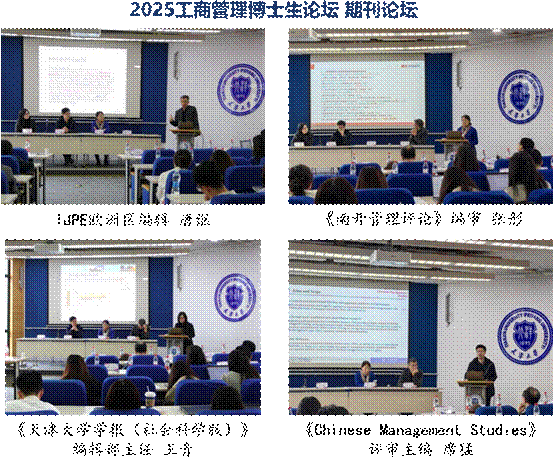

The journal forum session was chaired by Professor Liu Weihua, Director of the Operations and Supply Chain Management Department at CoME. Journal editors introduced their respective publications and answered questions from attending students. During the journal forum, four journal representatives introduced their journals' positioning and characteristics.
Professor Tang Ou, European Editor of International Journal of Production Economics, stated that the journal aims to connect industrial practice with economics and management theories, receiving about 3,800 submissions annually with an acceptance rate of approximately 10%. He emphasized that review standards focus on practical contribution, novelty, and inspiration of research, and suggested that doctoral students should avoid overly niche or excessively popular research areas when choosing directions, focusing on gradually developing personal characteristics based on solid foundations.
Editor Zhang Tong from Nankai Business Review highlighted the journal's rising impact factor, its focus on national strategic priorities, and its advocacy for management research transformation based on Chinese practices. The journal particularly welcomes high-quality case studies and qualitative analysis, and actively promotes academic achievements through new media platforms.
Wang Qing, Editorial Department Director of Journal of Tianjin University (Social Sciences), stated that as a comprehensive social sciences journal, it is committed to serving disciplinary construction, focusing on setting up hot columns combined with current affairs, emphasizing efficiency in the review process, and actively striving for CSSCI journal inclusion.
Xi Meng, Review Editor-in-Chief of Chinese Management Studies, emphasized the journal’s focus on enterprise management research in the Chinese context, with an annual acceptance rate of about 6%–8%, and short review cycles. He emphasized on theoretical innovation and methodological rigor, and clearly stated non-acceptance of studies using homologous cross-sectional data.
During the Q&A session, attending experts exchanged views on differentiated service strategies, cross-disciplinary research between behavioral economics and management science, balancing methodological innovation with the cutting-edge nature of research topics, and acceptance of cross-sectional data.
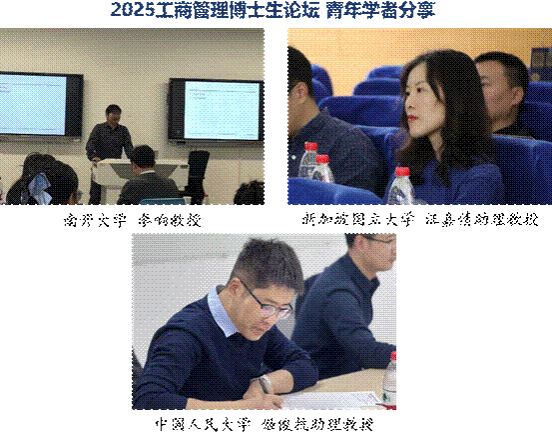
In the parallel forums, three outstanding young scholars shared their insights. The Strategy and Marketing sub-session was chaired by Associate Professor Luo Cheng, Director of the Marketing Department at CoME. Assistant Professor Wang Jiaqian from National University of Singapore Business School delivered a presentation titled "PhD Career Planning Experience Sharing," vividly explaining key points and methods for PhD career planning based on personal experience. Assistant Professor Ji Junkang from Renmin University of China Business School delivered a presentation titled "Management PhD Research Path: Personal Experience Sharing and Forward Suggestions," sharing experiences and suggestions for improving research capabilities and growth of management PhD students. The Operations sub-session was chaired by Professor Liu Weihua, where Professor Li Xiang from Nankai University delivered an in-depth presentation titled "Supply Chain Operation Mode Selection Research: A Systematic Framework" and engaged in lively discussions with attending students.
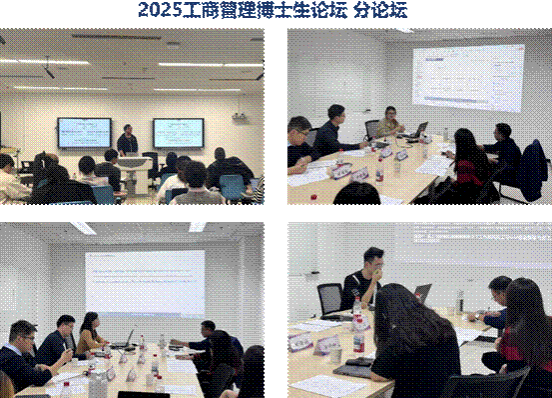
The forum established three parallel sessions focusing on Strategy and Marketing, Human Resources, and Operations, with 16 experts providing on-site feedback. Each parallel session featured enthusiastic paper presentations and discussions.
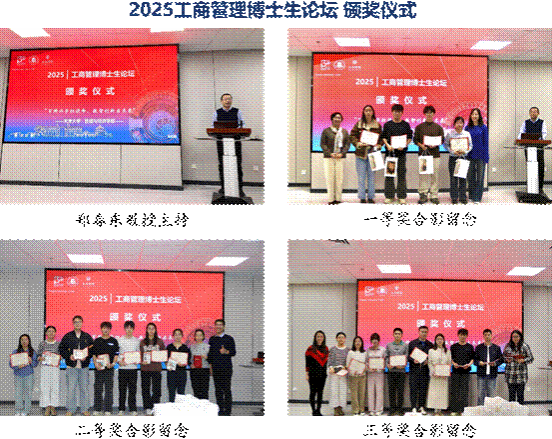
The forum closing ceremony was chaired by Professor Zheng Chundong, Vice Dean of CoME. Professor Dong Yuntao from Peking University, Assistant Professor Wang Jiaqian from National University of Singapore, Assistant Professor Ji Junkang from Renmin University of China, and Professor Zhang Huiying from CoME served as award presenters, jointly presenting awards to 22 outstanding papers selected through expert review with other commenting experts.
The successful hosting of this doctoral forum represents an important initiative by CoME in continuously advancing business administration discipline construction and fostering a strong atmosphere of academic innovation. The forum not only provided a high-level exchange platform for young scholars worldwide but also injected new momentum into the development direction of "Igniting the Future with Digital Intelligence and Innovation" through in-depth collision of cutting-edge theories and integration of practical wisdom. In the future, CoME will continue to use high-level academic activities as a vehicle to deepen interdisciplinary dialogue, expand international cooperation networks, continuously promote knowledge innovation and talent cultivation quality improvement, and contribute "Tianjin University" strength to serving national strategic needs and constructing a self-directed knowledge system for management science with Chinese characteristics.